The Craft
Nothing here is quick.That is the point.
Every Urban Adda piece leans on one of three techniques, each older than the republic and each impossible to rush. Below: what they are, where they live, and what they ask of the hands that make them.
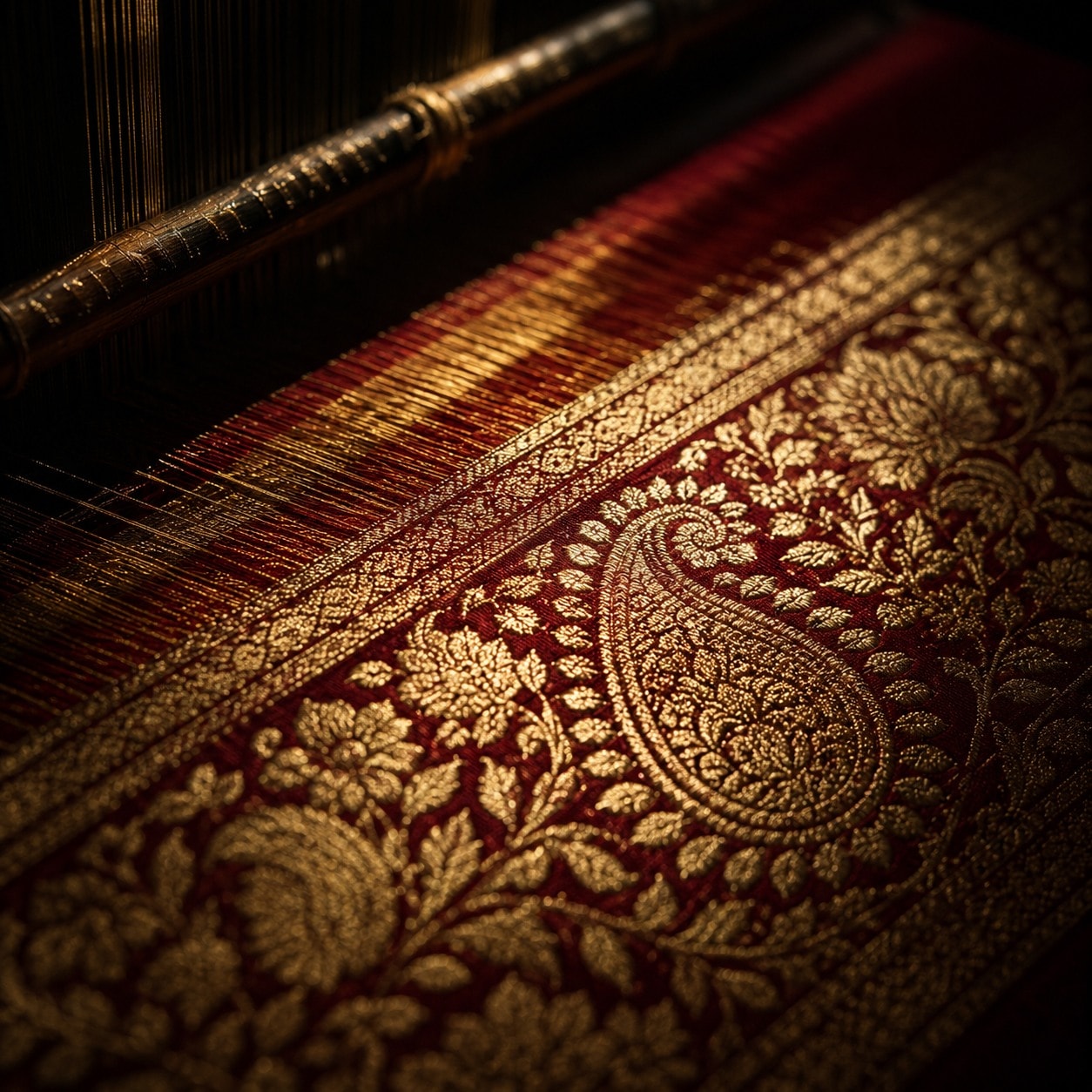
01 · Varanasi
Kadhua weaving
The motif is woven in, never cut away.
In kadhua work, every butta is woven individually with its own discontinuous weft: the motif is built into the cloth thread by thread, not floated across it and trimmed later. There are no loose threads on the reverse; turn the fabric over and the back reads almost as cleanly as the face.
A single sari-length can hold a weaver at the pit loom for twenty-eight days. Powerlooms imitate the pattern in an afternoon, which is precisely why we commission the slow version; the drape, the density and the reverse tell the truth.
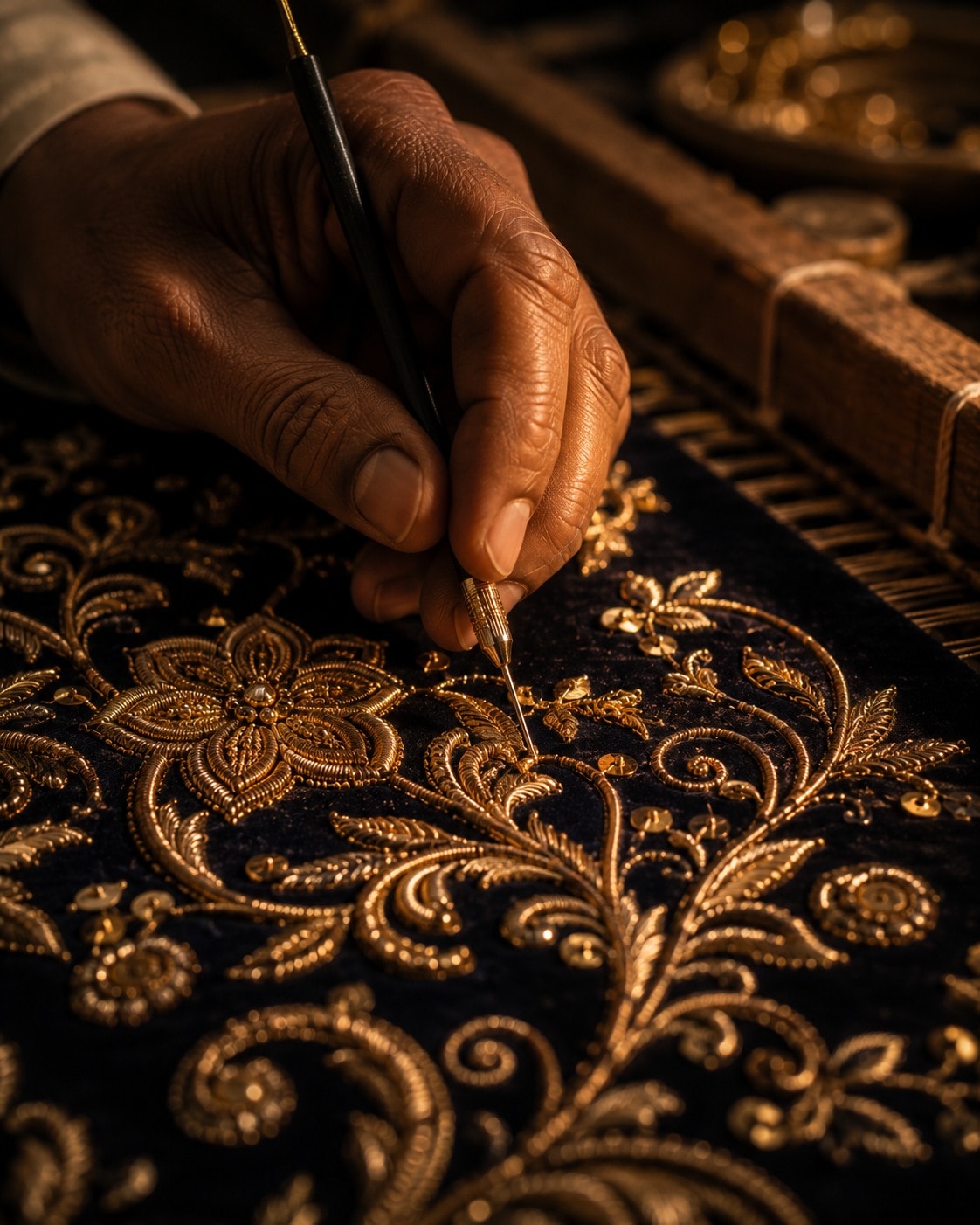
02 · Bareilly
Zardozi
Metal, bent to the patience of the needle.
Zardozi is embroidery in metal: bullion, dabka, coiled wire and sequin, worked over padded forms on cloth stretched taut across a wooden adda frame. The gold thread is couched down stitch by stitch rather than pulled through, so the metal lies raised and unbroken on the surface.
A bridal panel can ask for over two hundred hours across several pairs of hands, each karigar responsible for one passage of the design. We weigh our zardozi pieces before and after; the difference is the work.
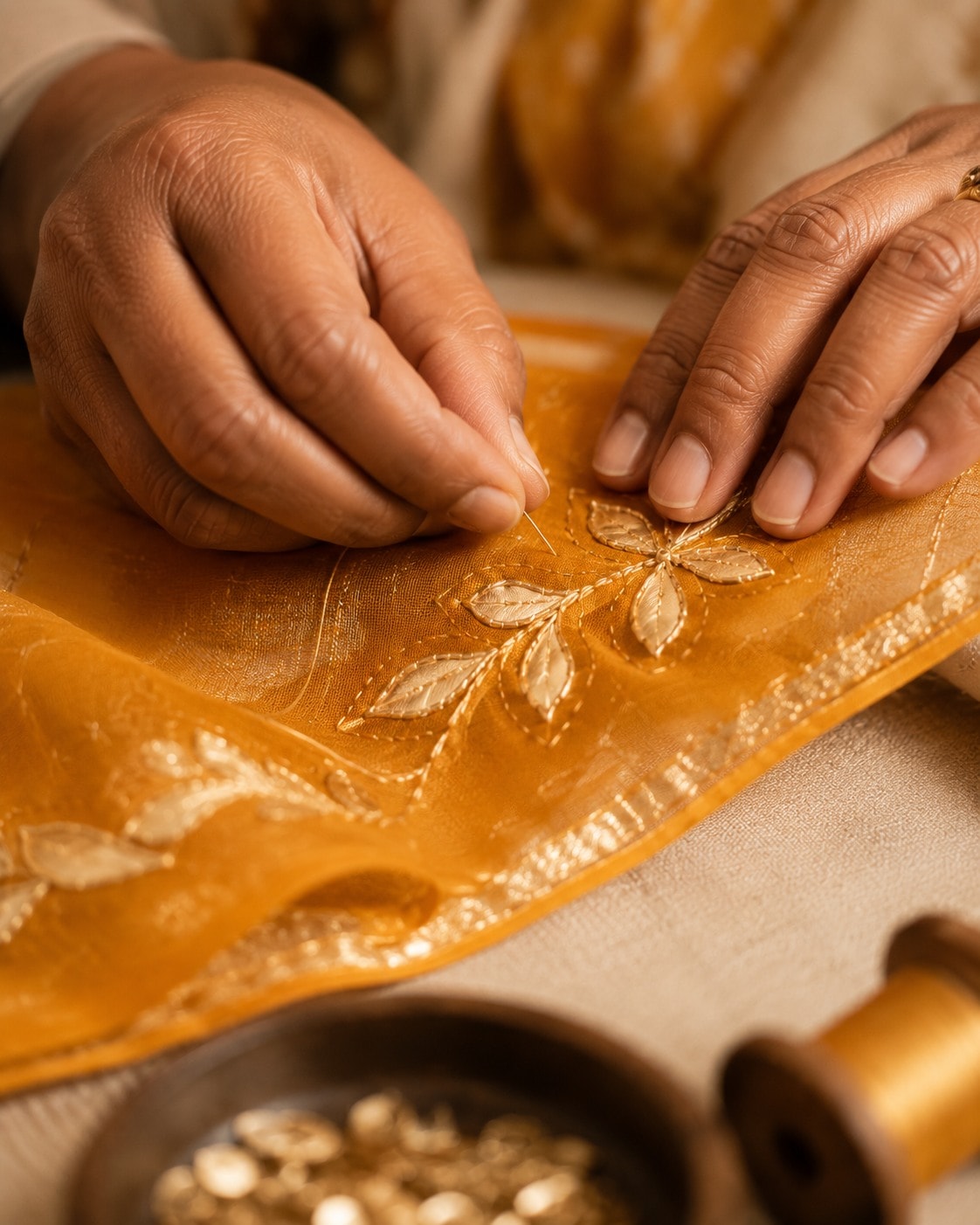
03 · Jaipur
Gota patti
Ribbon light, folded a thousand times.
Gota patti begins as flat woven ribbon of gold or silver thread, cut and folded by hand, hundreds of times over, into petals, leaves and birds, then appliquéd onto the base cloth. It is the appliqué of the Rajasthani courts: light-catching without weight, which is why it dances when the wearer does.
Ours is hemmed so the folded metal never meets the skin, and stitched rather than glued: a distinction you feel the third time the piece is worn, and every time after.